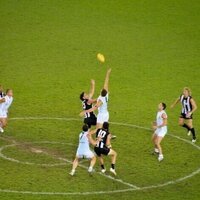


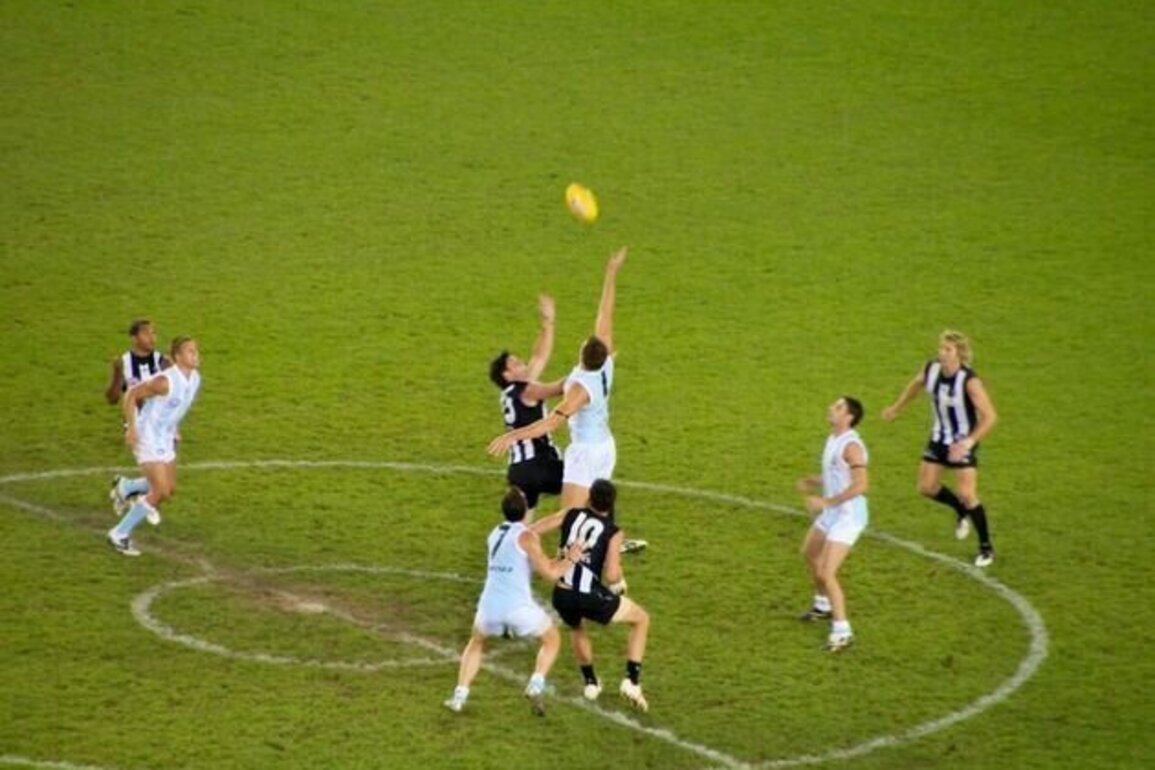
Australian football has the highest rate of concussion of any team sport in the world, but players including children continue to be put in serious danger of brain damage in every single game, writesBrian Hennessy.
Australia is a sport-obsessed nation, withAFL the most watched sport.
For itsfirst 86 years, the VFL/AFL was a domestic Australian football competition based around Melbourne. In 1977, former playerAllen Aylettwas narrowly elected President of the VFL on a platform of establishing a national competition, which commenced with the South Melbourne Swansmoving to Sydneyin 1982. Today, the AFL is one of the most successful sporting leagues in the world. The AFL itself (not including member clubs) has anannual revenueof over $1 billion dollars, with some two thirds of this from TV rights. Itpays no taxon this revenue. Former CEOGillon McLachlandeclared, on his departure in 2023, that the sport was in "rude health". The current CEO,Andrew Dillon, said recently that the game is in"unbelievable shape".
The inconvenient truth confronting the AFL is that the sport is a high risk, dangerous activity and that sport generally has now transitioned to an era with a strong focus on safety: boxing is now marginalised (remember TV Ringside before colour TV), Formula One has gone from 15 deaths per decade to less than oneand batsmen in cricket now wear helmets. Further,concussion, until the 1990s thought to be fully reversible, is now recognized as being able to cause lifelong damage to the brain leading to early onset diseases including Alzheimers, Dementia, Parkinsons, MND or seizures. No one signs up for permanent, progressive brain damage. Not all risk can be removed from sport, but sport must not be allowed to destroy lives.
Credibleresearch studieshave identified that Australian football has thehighest rate of concussionof any team sport in the world.
(Source:completeconcussions.com)
It also has thehighest average numberof significant head impacts per player per match(29), while Rugbyand American football both have 14. Repeated sub-concussive head impacts can lead toChronic Traumatic Encephalopathy(CTE), degenerative and irreversible brain damage for which there is no diagnosis, until after death, or cure. The problem is people dont know they have CTE. Hospitalisations due to concussion in junior AFL have doubled in the past decade and are the most prevalent injury in the sport (Australian Institute of Health and Welfare). Unfortunately, GPs and hospital emergency departments around Australia do not have consistent diagnosing/reporting protocols for TBI from sport and so the full extent of the problemis unknown.
Australia has long been a world leader in public health (seat belts, tobacco, sunburn, guns, vaccinations) but there is one key area where experts, including Concussion Legacy Foundation (CLF) founderDr Chris Nowinski, say we are lagging other developed nations: sport-related traumatic brain injury (TBI). According to the ABS, over 750,000 Australianshave a brain injurywith two out of every three acquiring their injury before the age of 25. Most concussions in teenage years occur playing sport. Children need a brain for life. Research by theMurdoch Childrens Research Institutefrom over 90,000 children who were concussed, shows us that children take twice as long to recover compared to adults: Children with concussion cannot be managed as adults.In Australia, by age 16, over 20% of children will have sustained a concussion. Further, up to 90% of concussions in community football are unreported.
Experts stateanyone who has played AFL or rugby for fiveor more years at any level is a candidate for CTE. Published independent globalstudiesshow thatcontact sport athletes are at least 68 times more likely to develop CTE than those who did not play contact sports. If you pay lip service to concussion and CTE, the result is dead men walking.
Suicide is theleading cause of deathamong young Australians. The risk of attempted suicide isthree to four times higherin patients with severe TBI compared with the general population.
Medical authorities are alarmed: as The Royal College of Pathologists of Australasias (RCPA) ground-breaking 'Position Statement on CTE' in late 2023 stated:
In 2023,a study by Macquarie Universityresearchers looked into the academic performance of thousands of students across the country who had been admitted to hospital with a concussion. They found 77% of those who sustain a severe head knock are less likely to finish Year 12.
Dr Bennet Omalu, on whose work themovie Concussionwas based,says kidsshouldn't play contact sports until they're 18:
Chris Nowinskihas stated, "There is no reason for children to play adult forms of contact sport."Nowinski's positionis that Australia needs to stop "hitting kids in the head" and move faster on implementing concussion education, rule changes, and long-term care for athletes to catch up with international standards.
TheBasic Concussion Principleis "If in doubt, sit it out". With TBI, there is a huge amount of doubt!
Australian parents arevoting with their feet. In 1990, soccer and AFL had about the same number of participants in Australia. Now soccer has three times as many players as AFL and basketball has double..
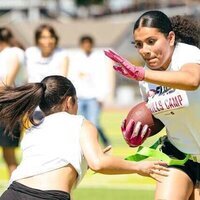
In the USA,Flag footballis thefastest growing team sportin the nation, with far more players than contact NFL football, whose numbers are declining rapidly (studies indicate96% of NFL elite players have CTE), and Flag will be included in the 2028 LA Olympic Games. Tackle football has23 times the numberof high severity head impacts compared to Flag. Every 2.6 years of playing tackle football (from juniors up)doubles the riskof CTE.
In the UK, the Government has now mandated consistent concussion protocols across all sports, a concussion passport for all contact sports participants and in 2025 appointed anIndependent Football Regulatorto sustain the sport into the future.
Currently, safety in sport in Australia is poorly regulated. Self-regulation by peak football bodies has not been successful. Every sport does its own thing. Why doesnt the AFL take concussion seriously? Concussion is bad for business.The AFL has dropped the ball in its fundamental obligation: to provide a suitable duty of care for players. With all the money in the sport why have the players been left behind in obtaining a safe workplace? Peak football bodies have a conflict of interest between entertainment dollars (rivers of gold) and player health care.
TheAFL saysit has made over 30 changes to rules to address concussion (CTE is ignored). Unfortunately, concussions are not reducing at elite level, where AFLPA surveys indicate well over 30% of all AFL players suffer a concussion each year, and they have been increasing at junior/community level. There are inadequate penalties for non-football acts.
73% ofpast AFL players have daily problems linked to concussion. Many of yesterdays heroes cannot remember the highlights of their careers, have lost their families, cannot hold down a job, have problems with loss of identity, anger, anxiety, depression, early onset dementia and worse, and often find it difficult to obtain support from the AFLPA.
AFL neglect of past players is creating a sporting underclass, many suffering in silence, many with very poor quality of life. Professional sportspeople in Australia haveno legal, insurance or income protection for TBI. So, the situation is that participants in AFL football, the worlds most dangerous team sport in terms of TBI, have the least protection/support of any group in the entire Australian workforce.
The AFL has a poor history in managing concussion. For two decades, its main advisor,Dr Paul McCrory,deniedthere was a linkbetween hits to the head and concussion. A program he managed to test 550 past players produced no results. AFL return to play protocols (12 days) are arbitrary and out of date, as is player testing. The AFL "Big Tobacco"culture is to deflect/deny/delay/distort the reality of TBI. It controls the narrative via a daily flood of media which crowds out the crisis.
In thecurrent class actionby past players against the AFL, theAFL defenceclaims players themselves were responsible for their 'health and wellbeing, and that players knew the risks of injuries before taking the field.
TBI (Concussion and CTE) is the number one problem for collision sports around the world. It is the silent killer that destroys families. Unfortunately, the management of TBI in Australia is like the Wild West: it is seriously out of control. The recentSenate Inquiry into Concussion and CTE in Sportheard all the heart-breaking stories but took no decisive action.
Where to from here?
The medical science freight train is about to hit the AFL:within 5-8 yearsCTE will be able to be diagnosed in the living. And concussion will be diagnosed in real time. Once children are diagnosed with CTE from participation in AFL or Rugby it will be a very different future for these sports. Children will stop playing these sports. Children need a brain for life. Parents wont play chicken with their childrens brains. (Note: theKeith Titmuss death in NRLis the canary in the coalmine.)
So, what to do for a better future?The AFL must address its biggest issue: making the sport safer. Save the player, save the game. Prevention is better than cure because often there is no cure for brain damage.
A plan to make the sport safer, without diminishing its public appeal, could include the following:
(*Government action required)
John Hennessyisa former VFL/AFL corporate planner who was involved in taking the game national in the 1980s regarding ground rationalisation, teams in Sydney andBrisbane, and establishment of the VFL Commission.As at February 2026, John is now a board member of theCommunity Concussion Research Foundation, a non-profit charity.