

Amid renewed debate over black bloc activism,Omar Hassanreplies toTom Tanukiscritiqueof his article, published on 29 November, calling for focus and unity on the Left.
I APPRECIATE Tom Tanukis response tomy articlediscussing how the Left should respond to the resurgence of the Far-Right. Its important that the Left can have serious political debate about politics and strategy without resorting to name-calling and sectarian sniping. But I remain entirely unconvinced by his defence of the black bloc.
Lets start by summarising where we agree.
First, I accept that I dont get out much. Having a 17-month-old baby does that to a guy.
More importantly, we agree that the Far-Right is a serious threat that must be responded to. Then theres our shared view of the cops as an anti-democratic, racist institution that regularly targets the Left and working-class people while giving the Far-Right a free pass.
Physical resistance, rocks and how to build a mass movementAntifascist combat training is about feeling safe, not tough.
And we definitely both think that the growing powers of police to suppress our right to free speech and public protest must be opposed.
More surprisingly, we also seem to agree that the throwing of rocks at cops on 19 November was a stupid move that distracted attention from the fascists, gave authorities a free pass to unleash violence against anti-fascists and has set us up to be subject to further repression moving forward.
At least, thats my interpretation of the following statement:
Finally, we both understand that we need a mass movement to challenge the Right.
So what are we debating, exactly?
Well, lets start by identifying the scale of the Far-Right threat itself. Far-right politics is no longer consigned to the fringes of politics, but is now an entrenched part of capitalism as it hasnt been since World War Two.Trumpis in the White House, deploying a range of fascistic policies at home and abroad. In Italy, an acolyte ofBenito Mussoliniis in power, while in the UK, France and Germany, similar figures are the main opposition leaders.
Here in Australia, the situation is not as bad, but it is heading in a similar direction. One Nation has now shot up fromsix to 14 per centin the polls, and the party hasdoubled its membershipbetween May and November. SenatorPauline Hansonis about to be reinforced by a former Deputy Prime Minister of Australia,Barnaby Joyce.
Sensing this danger on their right flank, the Liberal and National parties are both shifting dramatically to the Right, legitimising once extreme politics in the process. The Far-Right danger in Australia, therefore, goes well beyond someLARPing Hitler wannabes. It is the much more organic and locally rooted version of extreme right politics, which has supporters across the country, including in the political establishment.
'March for Australia' losing numbers and strengthAustralias far-right marches have gone from working-class rage to white nationalist delusion.
Flowing on from all this, there have now been four significant far-right demonstrations in the last two months (at least in Melbourne and Sydney), with three of them numbering in the thousands. This is very different from recent history, where, with the exception of the firstReclaim Australiamarches and the brief antivax moment, most gatherings of the Far-Right have been limited to a few hundred.
In that context, denying the Far-Right the ability to take over our streets was an appropriate goal that could realistically be achieved by the radical Left. Such victories could demoralise the more casual supporters of the Far-Right, leaving the hardcore fascist cadres more isolated and ineffective.
But does anyone really think that the Far-Right can be so easily demoralised today? Even if every one of their marches was somehow thwarted due to genius street-level tactics from our side, all they would need to do is turn on the TV to console themselves. There, they would see Trump andPutinstrutting the world stage, Israel freely committing genocide, and growing concessions to their program from supposedly centrist figures likeStarmerandMacron.
And with far-right ecosystems growing more sophisticated in recent years, including old and new media, electoral campaigns and cultural boycotts, it is no longer the case that street mobilisations are the only or even main way that they build.
So what will it take to drive the Far-Right out of society? Tom blithely dismisses my argument that fascism will exist so long as capitalism does, assuming the statement was a mere sales pitch for the (excellent)Marxism conference. But we are nearly a century on from Hitlers seizure of power. Since then, weve seen far-right or fascist figures take power in countries as diverse as Spain, Chile, Indonesia, Hungary, Russia and now the USA.
AfterElon Musks salute andRineharts poetry, maybe its time to concede that Marxists are right about the links betweenbig business and fascism.
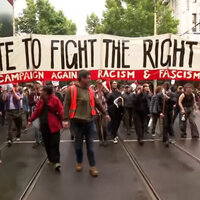
There are, of course, lots of things we can do to push the Far-Right back short of ending capitalism. In the short term, this means building a mass movement of anti-racists and anti-fascists. Such a movement can hold public space, and give confidence to its members to respond to the racist lies of the Right at home, at work and in our communities.
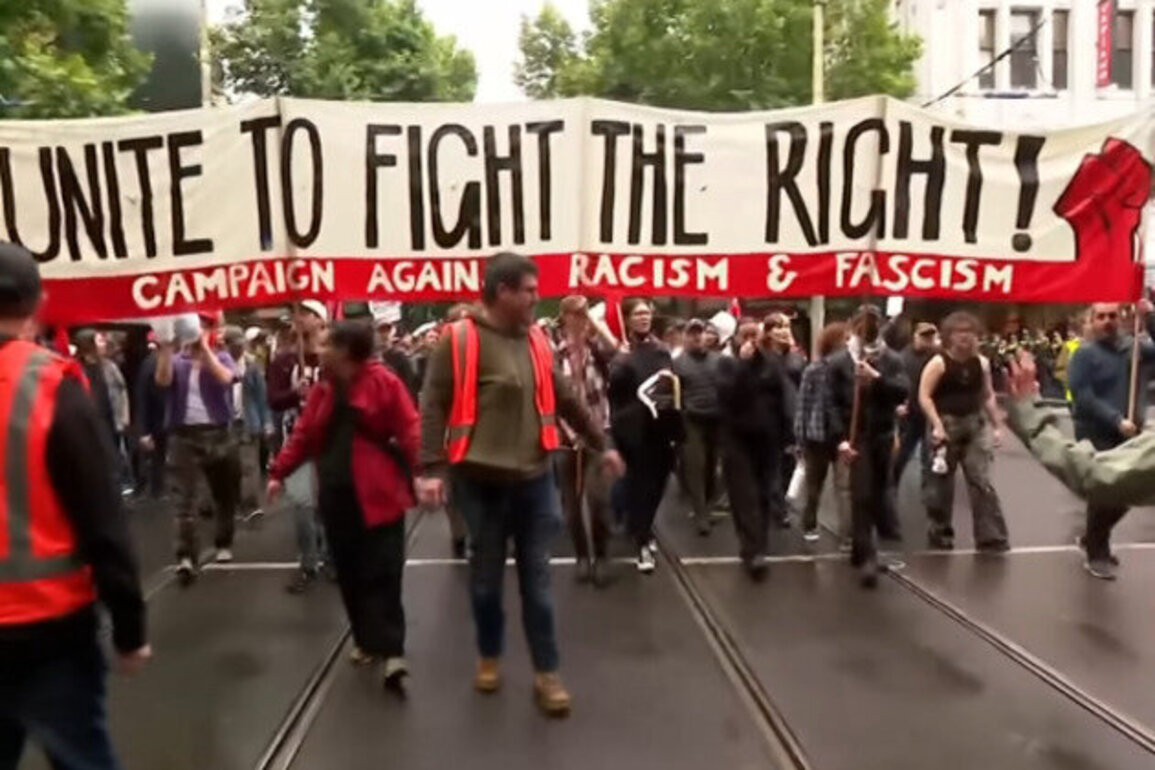
Tom claims to support this goal, but insists that a permanent auxiliary schooled in antifascist combat training is also needed. But as he admits, such groups failed to make any impact against the mammoth31 August protestsin Melbourne. And as subsequent events have shown, these tactics are not somehow complementary to a mass movement but counterposed to it.
Why we show up when fascists marchRight-wing marches are little more than angry parades, but they are effective recruitment systems designed to attract interest for growth.
The scandal and repression that such ineffectual tactics bring down on anti-fascists make it harder to win broader support for anti-fascist organising in all its forms.
Related to this, there is an argument that black and grey blocs are a defensive tactic to keep people safe. But who exactly is it that is being kept safe? On the 19th, the black bloc turned a tense but relatively safe protest into a war zone by provoking the police for absolutely no reason. An individual activist armed with an umbrella or goggles might well have shielded themselves from pepper spray in that scenario, but everyone around them still suffered the consequences of their actions.
So in practice, the uniform doesnt simply act as a shield, but as an enabler of pointless confrontations, while also allowing police provocateurs to easilyinfiltrateand derail our movement.
Now, there are plenty of times when organisers might feel the need to push the boundaries of what is acceptable to the authorities, but there has to be a purpose. Its often right to march, strike or picket even when it has been declared illegal. I have been arrested at several actions, including aBDSaction targeting a pro-Israeli business and during the violent clearout ofOccupy Melbourne. These were broader campaigns where escalation was judged to be appropriate by a range of organisers.
Absent a conscious strategy, fighting with police or bashing a few Nazis is not purposeful; rather, it is a form of self-aggrandising theatre. And pretending as if the inevitable police backlash is unprovoked and unpredictable is dishonest.
Tom used theChristchurch massacreas a response to my critique around this point. I agree with his argument that stopping the Far-Right from growing is essential to prevent such atrocities from recurring. Far-right terrorism is a serious and growing concern.
But Tom does not explain how targeting handfuls of fascists on the edges of mass far-right demonstrations does this. To the extent that such individuals are radicalised by the Far-Right, it tends to happenonline. And its not as if Brenton Tarrant needed theUnited Patriots Frontto teach him to hate Muslims. A whole generation of mainstream politicians loaded the gun by weaponising Islamophobia to justify multiple U.S. invasions of the Middle East. The problem lies with capitalism and imperialism, once again.
Anti-fascists have always been at our strongest when we mobilise in large numbers. FromCable Streetin the 1930s to the blockade of theAFD youth conferencein Germany last week. Any movement that seeks to extend beyond the boundaries of the existing radical Left which we urgently need to be doing will necessarily involve people who are new to activism. We cant expect such people to attend our rallies in uniform or take short courses in urban guerrilla warfare.
Only by convincing everyday people to show up and build a movement that is defiant, bold and disciplined can we challenge the Far-Right and defend our communities from the bigots. This means mass mobilisations on the streets, yes, but also the strengthening of worker-led unions and anti-capitalist political parties whose activities and arguments can help to vaccinate the public against far-right demagoguery. Black bloc tactics have repeatedly made this goal harder; its time they were retired once and for all.
Omar Hassanis a member of Victorian Socialistsand a long-term anti-fascist and pro-Palestine campaigner.
Related Articles
- Why we show up when fascists march